The Industrial Logic of Ford Energy

The United States installed approximately 58 gigawatt-hours of battery energy storage in 2025 - a record, and still not nearly enough. Demand for utility-scale storage is growing at 20 to 25% annually, and industry forecasts project the U.S. market could reach 120 to 140 GWh per year by the end of the decade.

That growth curve creates a straightforward industrial problem: the global capacity to manufacture Lithium Iron Phosphate (LFP) storage exists, but the domestic capacity does not. The vast majority of LFP cell production today is concentrated overseas, and the current U.S. tariff environment has made continued reliance on imports economically unsustainable for grid-scale infrastructure. The American grid needs domestically production capacity for proven storage technology at volume.

Ford Energy exists to close that gap.

Manufacturing Pedigree, Not a Startup Story

The most significant risk in energy storage is not technology, it is execution. The market has no shortage of companies who assemble components sourced from third parties. What it lacks is vertically committed battery manufacturers with the production engineering, quality systems, and balance sheet to build and warrant storage infrastructure at scale.

Ford has designed five gigafactories; from advanced facilities in Cologne, Germany to domestic plants in the United States. Ford has manufactured more than 3 million battery packs across its global operations since 2005. That is not a capability we are building. It is a capability we are redirecting, applying the same high-volume manufacturing discipline that produces vehicles at scale to a grid that needs storage at scale.

An American Technology, Assembled at Scale in America

The chemistry at the core of Ford Energy’s BESS products has American roots. In 1996, Nobel laureate John B. Goodenough and researcher Akshaya Padhi at the University of Texas at Austin first identified Lithium Iron Phosphate as a viable cathode material for rechargeable lithium batteries - a safer, lower-cost alternative to cobalt- and nickel-based chemistries.

Over the following decades, LFP was developed and scaled into a globally proven technology with hundreds of gigawatt-hours of installed capacity worldwide. That global maturation is an asset: it means the performance data, cycle life validation, and safety record exist at a scale that project finance teams and independent engineers require.

What has been missing is domestic supply at the volume the American grid now demands. Today, the vast majority of LFP cell production remains concentrated outside the United States, and the current tariff environment - with effective rates on imported LFP cells reaching approximately 82% in 2026 - has made continued reliance on imports increasingly untenable for U.S. energy infrastructure.

Ford Energy is addressing that gap directly. By manufacturing LFP prismatic cells and modules in Glendale, Kentucky and at BlueOval Battery Park Michigan with domestic and foreign materials, we are building domestic production capacity for a globally proven technology - providing our customers with supply chain certainty, and a path to ITC domestic content eligibility.

A Disciplined Market Entry

The company’s initial commitment is 20 GWh of annual production capacity. In a market we expect to reach 120 to 140 GWh by 2030, that represents a pragmatic opening position which is meaningful enough to support a domestic backbone for the grid.

We are not building to a speculative forecast. We are building to demonstrated demand, with the industrial infrastructure to expand capacity as the market requires it.

Speed to Market: The Brownfield Advantage

The most significant bottleneck for domestic energy storage manufacturing is the timeline of greenfield construction. Building a new factory from the ground up takes years and carries execution risk that flows directly to customers waiting on product.

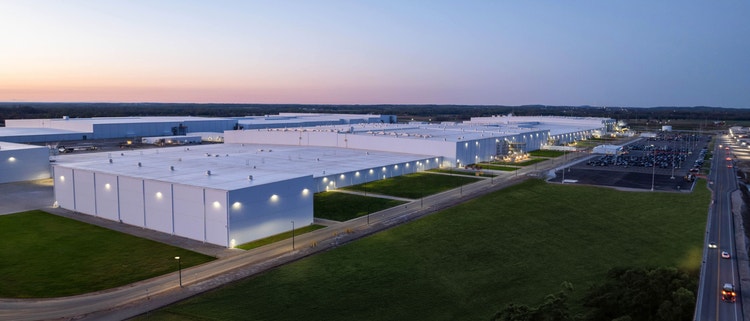
Ford Energy has a different path. Our strategy is anchored by the conversion of a 4-million-square-foot facility in Glendale, Kentucky. We are developing a gigafactory for energy storage production in Kentucky -- repurposing existing, purpose-built battery infrastructure to compress our timeline and eliminate the construction risk that defines most new entrants. Supported by our LFP production facility at BlueOval Battery Park Michigan, we will re-tool production lines into wholly owned Ford subsidiary facility, targeting a 2027 start of production with a level of industrial confidence that is rare in the American storage market.

For customers and project developers building to 2028 and 2029 commercial operation dates, that timeline matters. Ford Energy is not a future promise. It is a near-term manufacturing reality.

Counterparty Risk Is a Real Problem. We Solve It.

A Battery Energy Storage System is a 20-year asset. The most critical question in any procurement process is not which product has the best spec sheet, it is whether the supplier will exist to honor the warranty.

Ford Energy’s 20-year warranty is backed by a Fortune 20 balance sheet with over a century of continuous operation. That is not a branding claim. It is a bankability advantage. For project finance teams modeling asset life, and for utilities managing long-duration procurement, the financial stability of the manufacturing partner is a material input to the investment decision.

By increasing domestic supply, Ford Energy also provides a structural hedge against supply chain disruption as it was built to facilitate Section 48E tax-credit eligibility, reducing both counterparty risk and regulatory risk in a single procurement decision.

The Market Needs Builders

The U.S. energy storage market added record capacity in 2025, with approximately 85% of installations at grid scale. Growth projections through 2030 are steep, driven by renewable integration, data center load growth, and state-level storage mandates. The constraint is no longer demand. It is domestic manufacturing supply.

The energy transition has reached a phase where the ability to build matters as much as the ability to innovate. The grid needs U.S.-assembled storage that is available, warrantied, and produced to an industrial standard of reliability.

“We see this as a meaningful long-term growth market,” says Lisa Drake, President, Ford Energy. “We’ve taken a pragmatic first step with 20 GWh of annual capacity, and we have the facilities, the manufacturing discipline, and the balance sheet to scale further as demand requires it.”