U.S.-Assembled. Built for Demanding Applications.
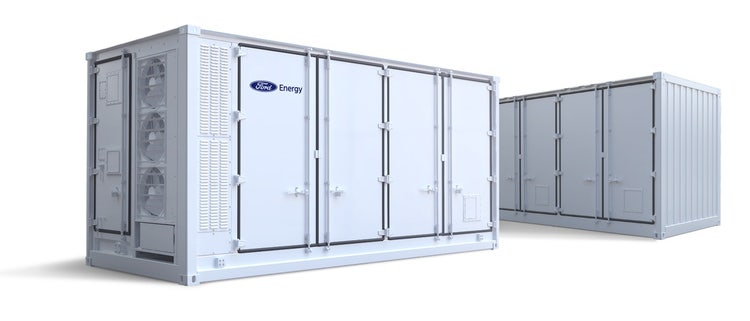
Rated Energy Capacity
5.45 MWh
Rated Cell Capacity in Amp-Hours
512 Ah
Standard Container Size
20 ft x 8 ft
Voltage Range
1040-1500 VDC
Unit Configurations
2-hour & 4-hour
Projected Annual Manufacturing Capacity
20 GWh
Built for Real Needs
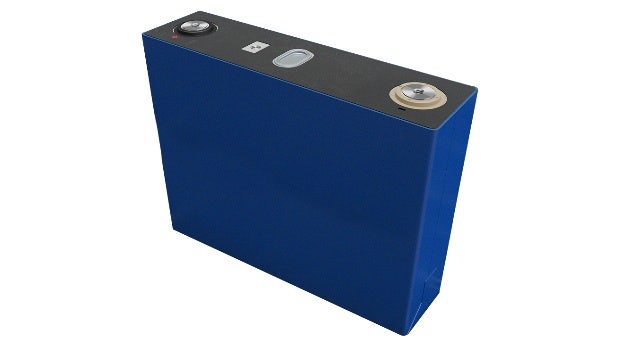
Our battery energy storage systems are designed for utility-scale, industrial or commercial applications. The system consists of LFP prismatic battery technology, liquid-cooled thermal management, and a battery management architecture. The Ford Energy DC block is designed to support a broad range of storage applications – where reliability, predictable lifetime performance, and serviceability matter.
Key Specifications
Today’s Technology for Today’s Storage Needs
Frequency Regulation
Rapidly absorbs or releases power, helping to maintain grid frequency stability.
Voltage Support
Supports power quality and helps to mitigate grid voltage fluctuations.
Rate Arbitrage
Charges the system when electricity prices are lower, for use when prices are higher.
Peak Load Shifting
Stores energy during lower-demand periods to be deployed later, when demand and pricing rise.
Demand Response
Adjusts charge and discharge cycles in response to peak-demand events.
Backup Power and Microgrids
Enhances reliability with features including backup power, black start strategies, congestion management, and microgrids.
Why LFP Prismatic Technology?
Why Ford Energy?
As a wholly owned subsidiary of Ford, we bring proven LFP prismatic technology with Ford manufacturing capabilities. This includes U.S. assembly, quality control, and customer support. The result is a clearer path to dependable product supply, controlled manufacturing scope, and long-term operational confidence.
U.S. Assembly
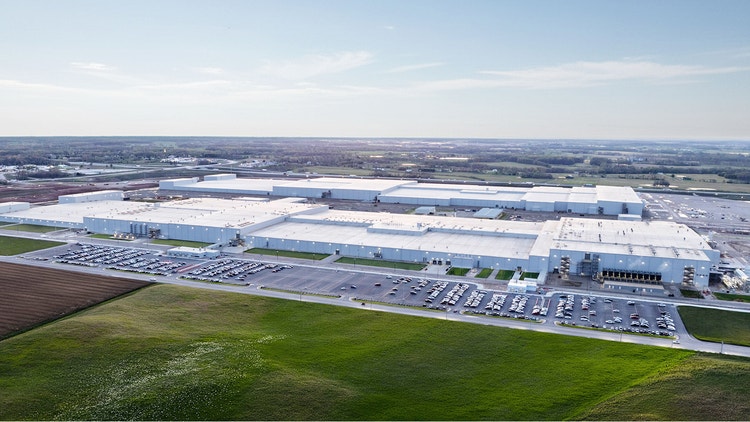
We are developing a gigafactory for energy storage production in Kentucky, supported by Ford’s broader U.S. operational footprint.
Cell-to-Container Scope
Our planned manufacturing breadth covers full battery cells – including production of electrode coils – assembled into modules and containers, all under one roof. This will deliver stronger quality control and traceability.
Proven Technology Base
The underlying LFP prismatic technology we use has already been deployed globally, at scale.
Built for Buyer Risk Reduction
Domestic assembly. Service support. Regulatory alignment. It’s all designed to help reduce supply-chain, compliance, and lifecycle uncertainty.
Built With Regulatory and Incentive Readiness in Mind

Need an Energy Storage Solution?
Whether you’re evaluating a project, exploring product fit, or looking for a domestic partner, Ford Energy is ready to provide solutions for a variety of applications.